Kanu by Book a demo

Kanu · wearable AI guide · by Code-X

The guide you wear all day.

It works offline and always gets you home. Kanu sits on your shoulder, sees all around you and tells you where to turn with a buzz on each shoulder. It is built first for people who are blind or have low vision, in Arabic and English, with all its AI on the device.

Camera view on Kanu Guide
360°
Buzz pods, one on each shoulder
L·R
Camera frames sent to the cloud
0
Wearable prototype, built today
V1

Drag to orbit · Click a part to isolate it

0%

Concept model. Kanu Companion follows the V1 prototype. Kanu Guide shows the design for the next prototype.

The problem

A white cane finds the ground. It cannot find the way home.

Millions of people learn to move with a cane or a guide dog. What they still lack is something that warns about obstacles at head height, remembers a route, and says where to turn, without covering their ears or costing as much as a car.

43M
people are blind worldwide
295M
live with moderate or severe vision impairment
$1.5k–12k
price of leading mobility devices, before subscriptions
  • Head-height obstaclesBranches, signs, open truck doors. The cane passes under them.
  • Getting backA new café is easy to reach with help. Getting home alone is the hard part.
  • Ears are busyBlind pedestrians listen to traffic. Constant audio directions compete with it.
  • Built for someone elseLeading devices are English-first, cloud-dependent, heavy, or all three.

Prevalence: GBD 2019 Blindness and Vision Impairment Collaborators, The Lancet Global Health, 2021, 2020 estimates. Prices: see the market table below.

Meet Kanu

One shoulder platform, two editions

Both editions share the same body, strap, battery and on-board AI. What sits on top changes, and so does the software.

For blind and low-vision users · Lead product

Kanu Guide

Headless and hands-free. A low 360° camera dome replaces the moving head, and two buzz pods, one on each shoulder, give directions you can feel.

  • Saves routes and takes you home, fully offline
  • Buzz left, buzz right, both to stop
  • Warns about obstacles at head and chest height
  • Open-ear audio, so traffic stays audible
  • White shell with reflective plates, visible at night

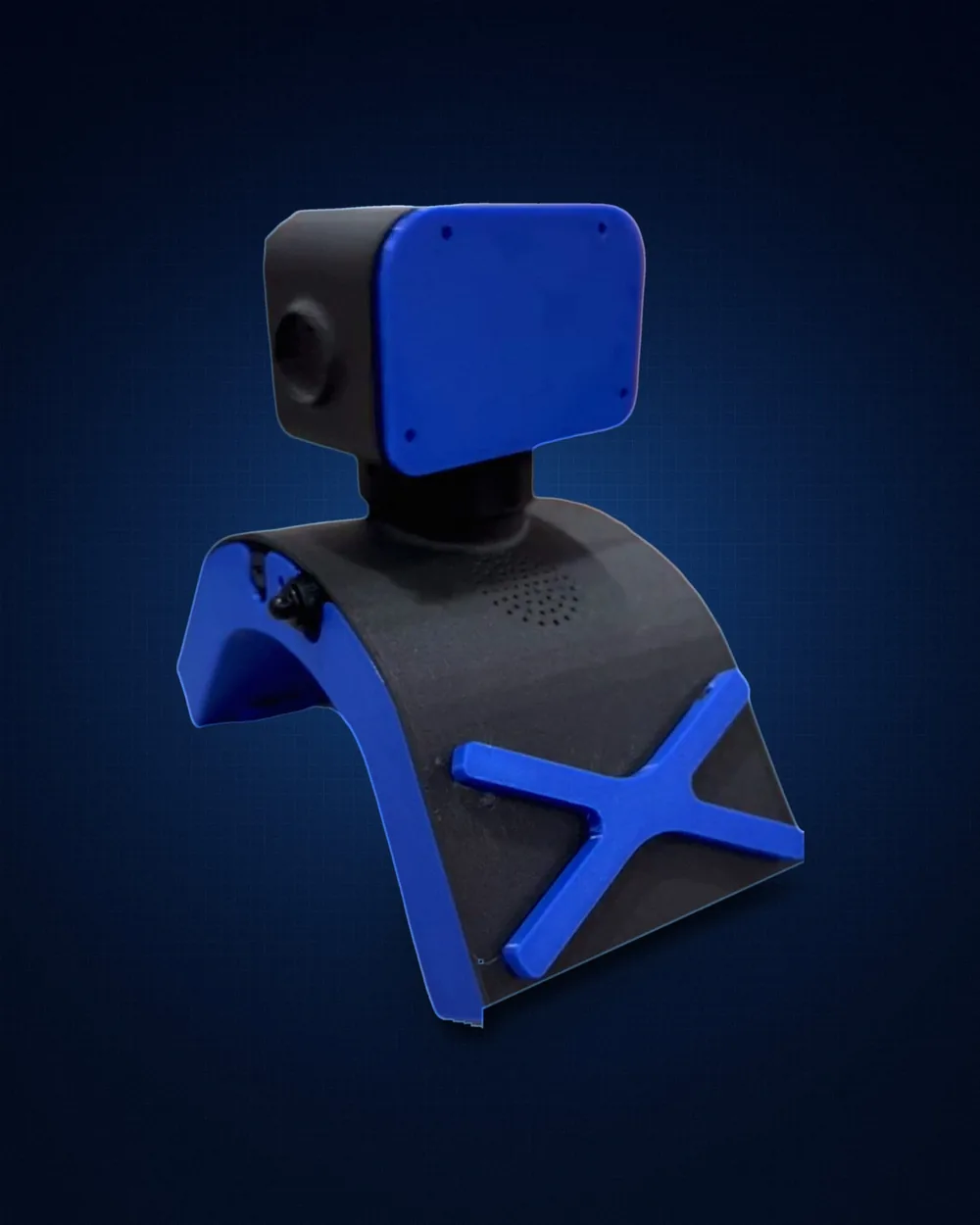
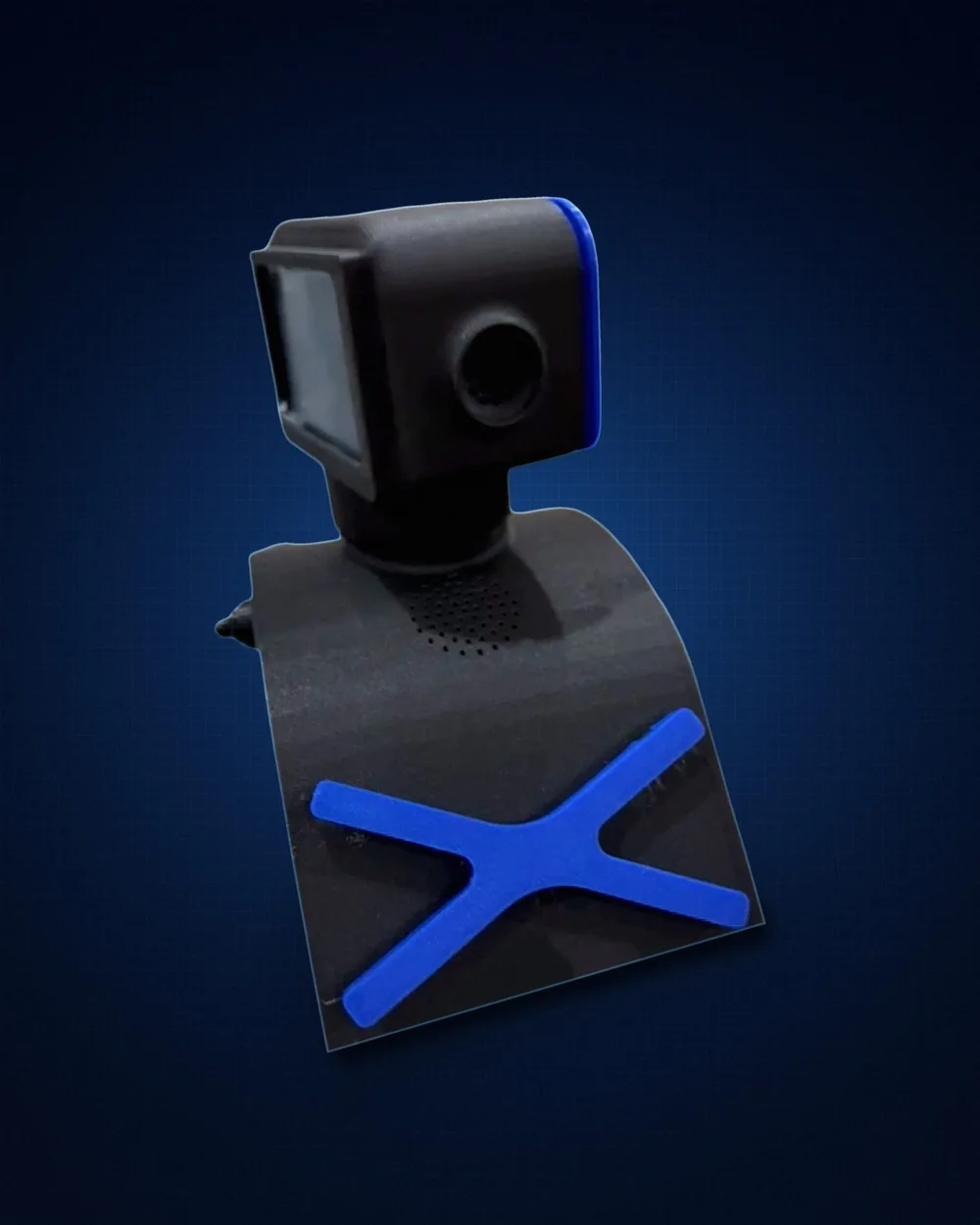
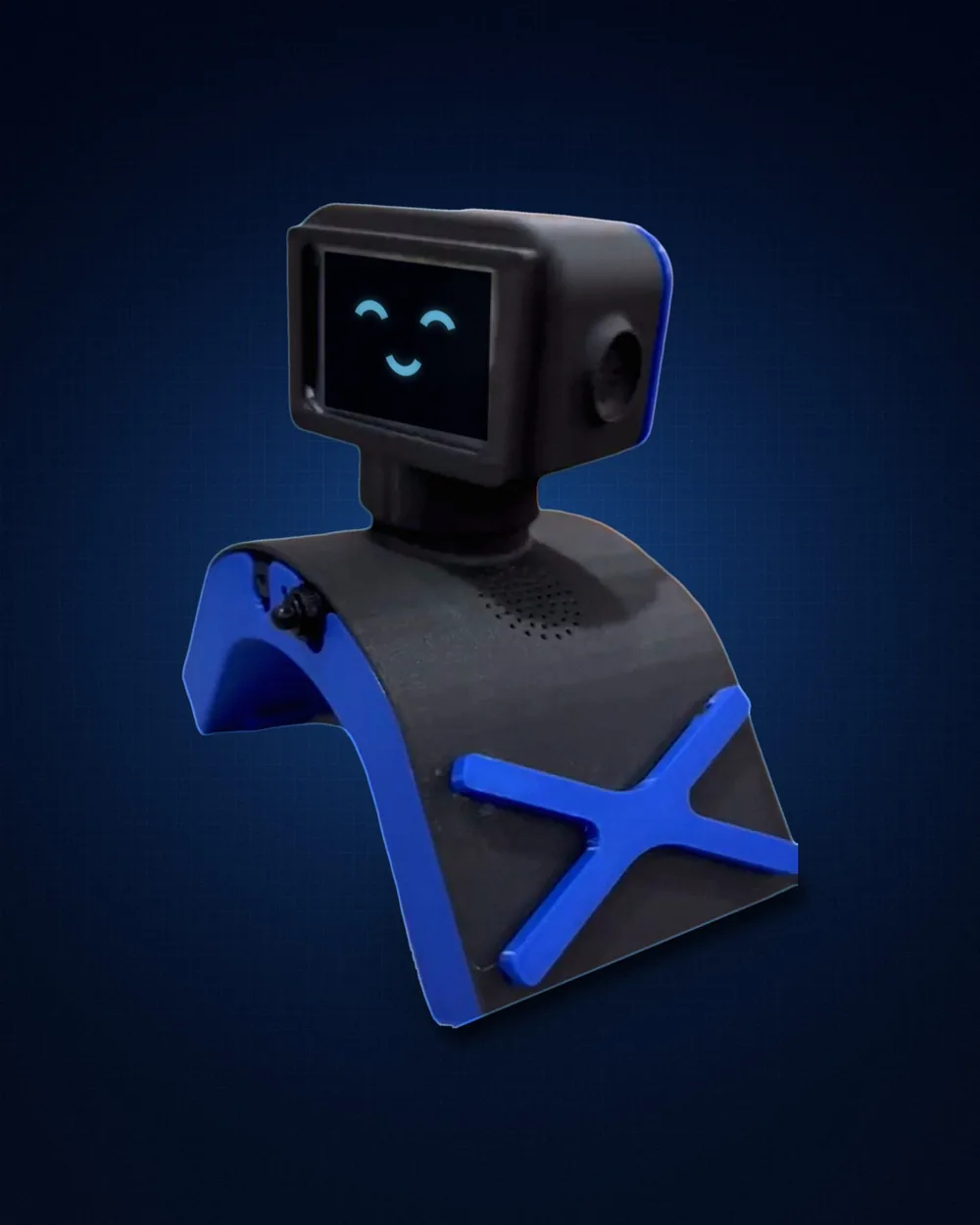
Kanu V1 prototype: a graphite shoulder unit with a blue X, a pan head and a smiling face on its screen

For everyday life, travel and the outdoors

Kanu Companion

The edition V1 is built on: a head that turns to look, a face that reacts and a voice at your ear. Personas change what it listens for and says.

  • Everyday: plans, reminders, where you left things
  • Travel: offline translation, Arabic dialects first
  • Trail: watches the path, leads you back
  • A red light shows whenever the camera is looking

How Kanu Guide works

Go anywhere. Kanu remembers the way back.

  1. Save the route

    Say “save this place” or press the side button. Kanu records the walk from GPS, motion sensors and what its cameras see along the way.

  2. Walk freely

    The 360° dome and depth sensor watch head and chest height, the zone a cane cannot reach, and call out only what matters.

  3. Feel the turns

    A buzz on the left shoulder means turn left. On the right, turn right. Your ears stay free for traffic.

  4. Take me home

    Say “take me home”. Kanu retraces the saved route step by step, with or without a signal.

The buzz language

Six patterns, learned in minutes. Tap one to feel it on the model.

Kanu watches head and chest height Cane sweeps the ground ahead Branch at head height
The cane sweeps the ground ahead. Kanu’s forward view covers head and chest height, where a cane gives no warning. Research on head-level obstacle detection notes that the white cane “does not protect against obstacles at the head level” (Technologies, 2025).

Where we are

V1 is built, and it is wearable

The first prototype was designed in CAD, printed and assembled by the Code-X team. It rides on the shoulder with a cross-body strap, turns its head on servos and shows a face on its screen.

Michael Hakim wearing the Kanu V1 prototype on his left shoulder, held by a cross-body strap. The screen shows a smiling face.
Michael Hakim, founder, wearing V1
Servo head turning on V1
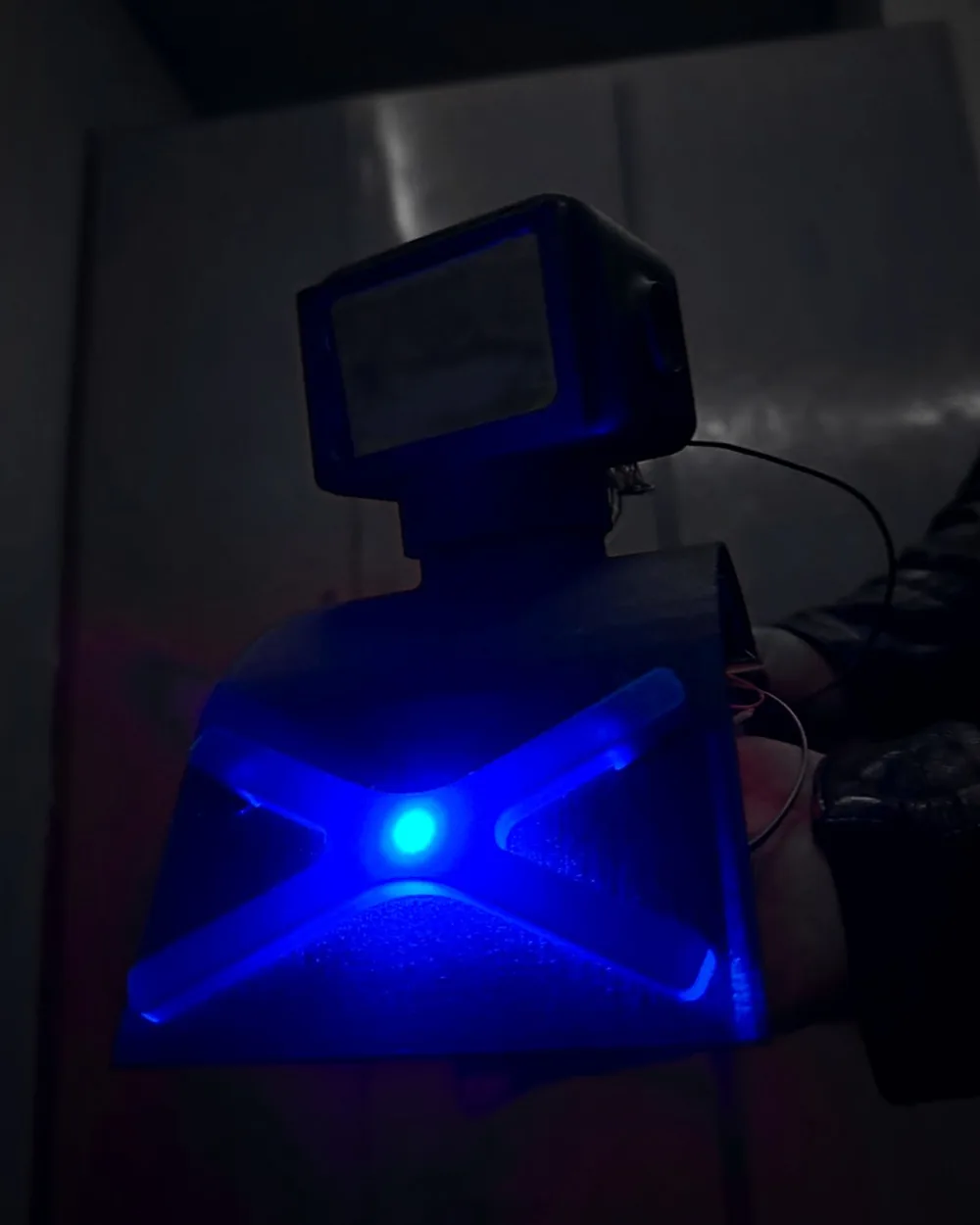
V1 in the dark with its X emblem lit blue
Light-up X emblem
V1 with its head turned to show the blue back plate
Head turned, blue back plate

Working on V1

  • Printed shoulder body with cross-body strap
  • Servo-driven head that turns side to side
  • Face display, speaker and light-up X

In development

  • On-device vision, voice and sentiment models
  • Offline route memory and “take me home”
  • Guide hardware: 360° dome, buzz pods, back band
From the lab: CAD and the build
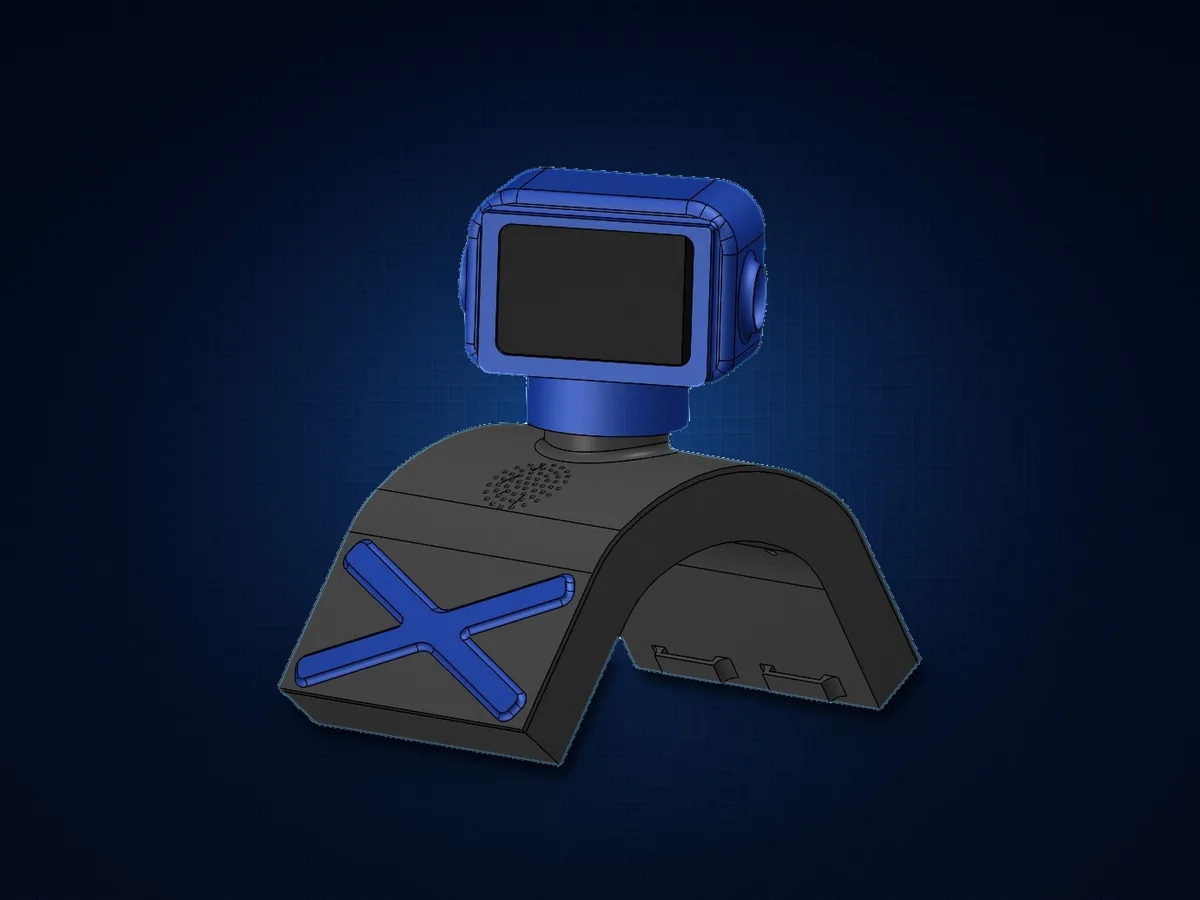
CAD render of V1, left three-quarter view
CAD, left
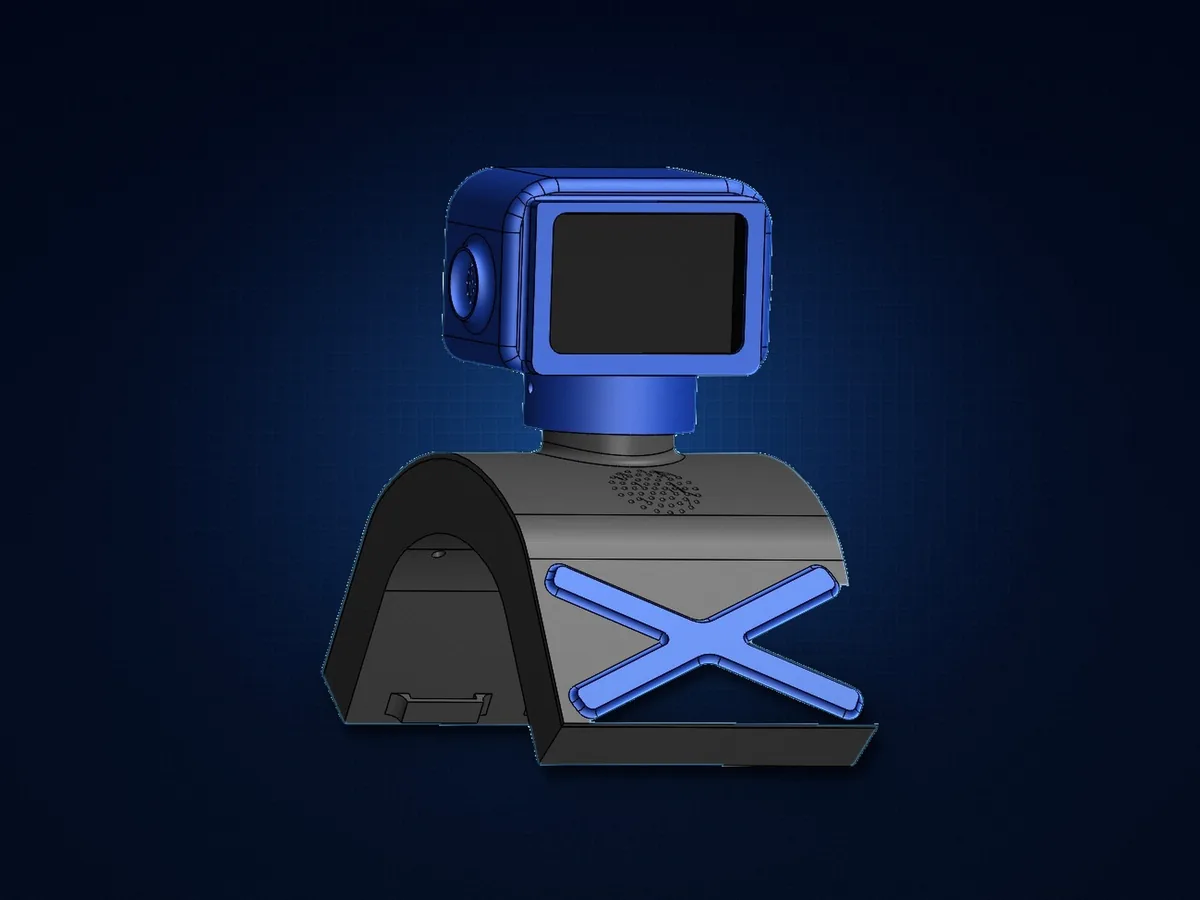
CAD render of V1, right three-quarter view
CAD, right
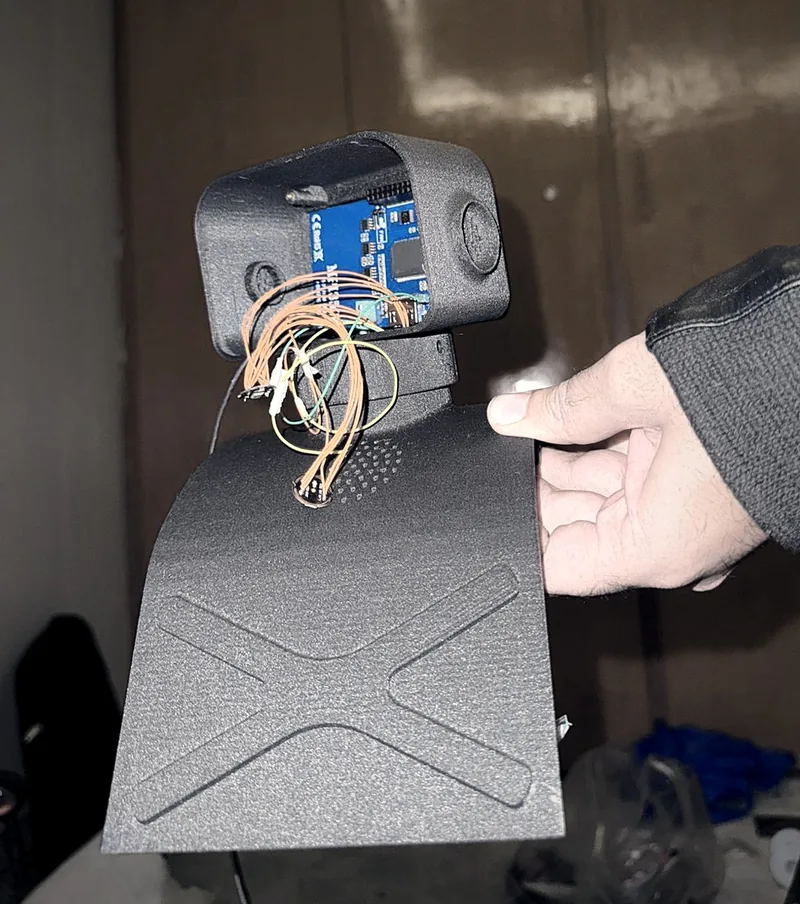
V1 head open, with the controller board and wiring visible
Head electronics
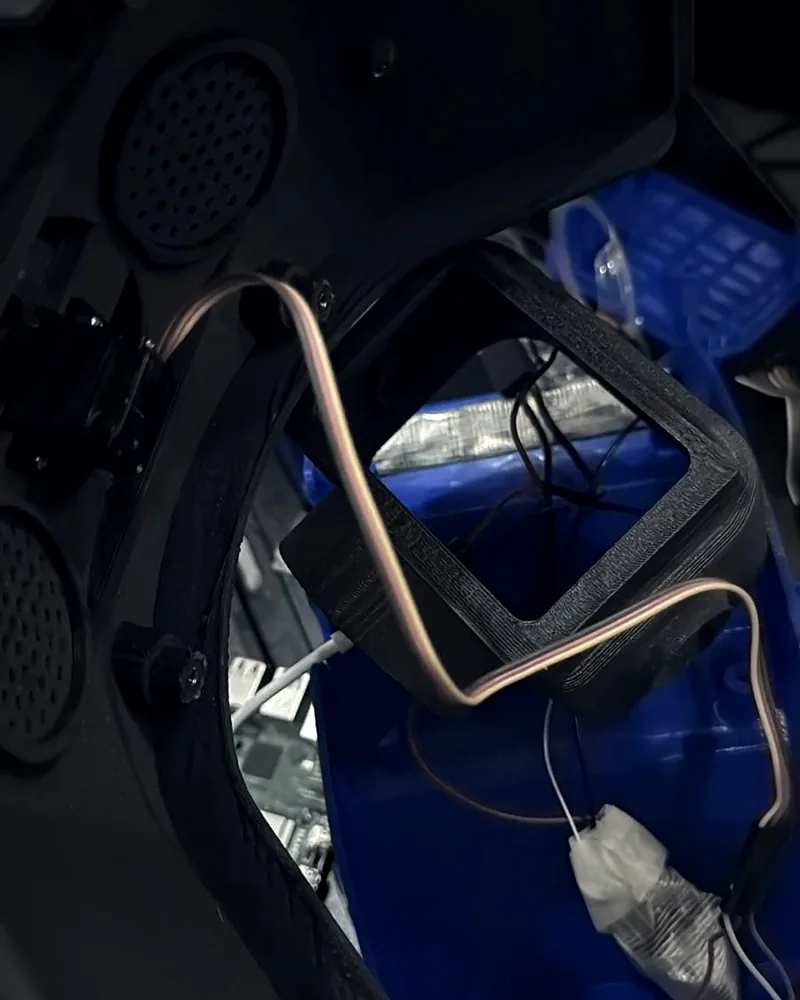
Inside the V1 body: servo, speaker grilles and wiring
Servo and speakers
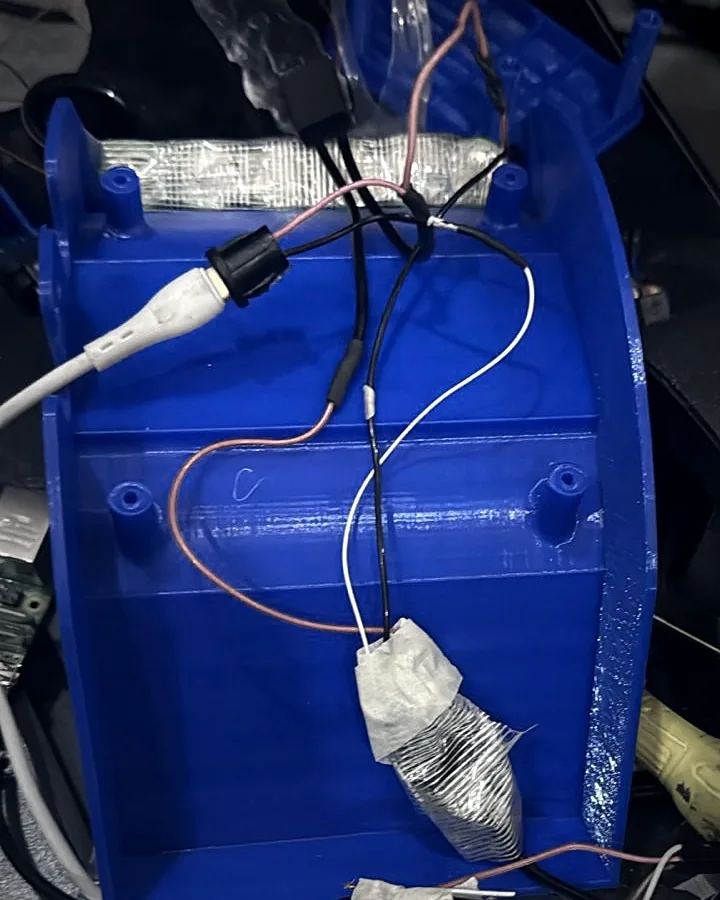
The blue inner chassis of V1 with power wiring
Inner chassis
Front of V1 showing the camera port, the speaker grille and the large blue X
Front slab and X
Shell assembly
V1 in the hand

Photos and video are of the real V1, colour-corrected. In the studio shots the face on the screen is simulated.

The intelligence stack

Six systems, all running on the device

Kanu’s software is modular. Each edition switches on the systems it needs, and new skills arrive over the air.

  1. 01

    Face & Voice

    Recognises familiar people by face and voice, even in a busy room.

    In development
  2. 02

    Sentiment

    Reads tone of voice and facial expression together to choose how to respond.

    In development
  3. 03

    Translator

    Offline translation of speech and signs, Arabic dialects first, drawing on Code-X’s Lebanese.ai dialect engine.

    In development
  4. 04

    Active Guard

    Obstacle awareness all around, with priority on head and chest height.

    In development
  5. 05

    Route Memory

    Stores paths from GPS, motion and visual landmarks, and leads you back along them.

    In development
  6. 06

    Core Logic

    Orchestrates every system and the hardware in real time, with no cloud round trip.

    In development

Privacy

Worn all day, private by design

A device on your shoulder sees your whole day. Kanu is built so none of it leaves the device.

AI runs on board

Vision, speech and route memory run on the device, with or without a signal.

Nothing raw goes out

Camera frames and audio are processed on the device and never uploaded.

One way in

The network brings in new models and skills. It never carries out what Kanu saw.

Why it is hard to copy

Hardware and software designed as one

We are preparing patent claims around these areas. Each ties the body, the sensors and the software together, which makes it hard to bolt onto an existing product.

  1. Two-shoulder haptic guidance Priority

    A direction language delivered through a pod on each shoulder, linked by a band, so turns are felt on the side you should go.

  2. Offline route memory

    Routes stored on the device from GPS, motion sensing and visual landmarks, replayed step by step to lead the wearer back.

  3. Head-height sensing from the shoulder

    A 360° camera dome and forward depth sensor at shoulder height, covering the zone a cane misses.

  4. One body, swappable top modules

    The same shoulder saddle carries either a 360° dome or a pan-tilt head with a face, so one hardware line serves several markets.

  5. A head that follows the conversation

    On Companion, the head turns toward whoever is speaking, combining voice direction with the face in view.

The market gap

Powerful devices exist. Few people can afford, carry or understand them.

Today’s leading mobility aids are impressive, but they are priced in the thousands, weigh a kilogram or more, or leave Arabic speakers behind. Kanu is aimed at the gap between a smart cane and a premium headset.

DeviceFormPriceWeight / battery
WeWALK Smart Cane 2Smart cane handleFinancing from $70/monthCane
Glide (Glidance)Wheeled guide you hold$1,499 + $30/monthAbout 4 kg
NOA (biped.ai)Harness over the shouldersAbout £3,000 (UK)Not published
OrCam MyEye 3 ProCamera on your glasses; reading and recognition$4,250Clip-on
.lumenHead-worn guide€9,999About 1 kg · about 2 h
Kanu GuideShoulder wearable with buzz podsAccessible price, set in pilotsTarget under 300 g · all day

Competitor figures are from each company’s site or published coverage in 2026 and may change: WeWALK, Glidance, NOA (user reports), OrCam, .lumen. Kanu figures are design targets.

  • PriceA fraction of premium devices, so families and NGOs can buy it.
  • Arabic firstBuilt in Lebanon for Arabic and English speakers, starting with the Levant and the GCC.
  • OfflineRoute memory and warnings work with no signal.
  • All-day comfortLight enough to forget, not a kilogram on your head.
  • Ears freeDirections you feel on your shoulders, not only hear.
  • Family layerOptional SOS button and family app for peace of mind.

Accessories

Built as a system, not a single gadget

At launch

  • Kanu TagsSmall Bluetooth tags for keys, bag and front door. “Where are my keys?” gets a buzz and an answer.
  • Open-ear earpieceVoice without blocking traffic sounds.
  • SOS button and family appOne press shares location with family. Opt-in only.

Later

  • Cane clip
  • Wristband
  • Reading dock
  • Spare battery
  • Chest harness
  • Rain cover
  • Guide-dog clip
Guide StarterKanu Guide, earpiece and three Kanu Tags
Guide PlusStarter, plus SOS button, family app and spare battery

Roadmap

From a working prototype to a platform

  1. Now

    V1 built

    Wearable prototype with servo head, face display, speaker and strap.

  2. Next

    Kanu Guide prototype

    360° dome, buzz pods and back band on the V1 body. Route memory on the device.

  3. Then

    Pilots

    Trials with blind and low-vision users and partner organisations in Lebanon and the GCC.

  4. Launch

    Kanu Guide, then Companion

    Certification, manufacturing and launch with the Guide Starter and Plus bundles.

Platform vision

  • 2027Aerial mesh: drones that share perception with Kanu
  • 2028Ambient cortex: rooms and devices that understand context
  • 2029Open skill network: third-party skills for every Kanu

Team

Built by an engineering company, not a lab project

Michael Hakim

Founder and CEO

Entrepreneur and business consultant with more than 20 years of experience. Founder and CEO of SourceX Holdings, a group of nine ventures across AI, software, marketing and commerce.

Code-X

Engineering

The SourceX company for AI solutions, software development and cybersecurity. Code-X designs, prints and programs Kanu in-house, and builds Lebanese.ai, its Arabic dialect engine.

We are looking for investors, pilot partners among organisations for the blind, and accessibility advisors.

Get in touch

See Kanu in person

Book a private demo of V1, request the investor deck, or talk to us about a pilot.